

Saturday, June 19
Franz Schubert – Selected Songs
During his tragically short life, Schubert composed over 1500 works. Included in these works are 600 songs and nearly as many piano pieces. Schubert, who suffered from severe mood swings due to cyclothymia, found solace in his compositions, all of which shed light on his emotional states. Often reveling in nature-centric poetry, many of his songs are poignant appeals to nature and its creatures.
Die Taubenpost
“I have a carrier pigeon in my pay, devoted and true; she never stops short of her goal and never flies too far. Each day I send her out a thousand times on reconnaissance, past many a beloved spot, to my sweetheart’s house. I no longer need to write a note, I can give her my very tears; she will certainly not deliver them wrongly, so eagerly does she serve me.”
This is the last song written by Schubert before his untimely death at age 31. Even though the song is in a major key, Schubert displays a depth of emotion that breaks its confines, evoking moods of sauntering optimism tinged with a wistful, heartbreaking uncertainty. This mastery of compositional skill is one of the many reasons scholars have deemed his works miracles of their kind.
Die Sterne
“How brightly the stars glitter through the night! I have often been aroused by them from slumber. But I do not chide the shining beings for that, for they secretly perform many a benevolent task. They wander high above in the form of angels; they light the pilgrim’s way through heath and wood. They hover like harbingers of love and often bear kisses far across the sea. They gaze tenderly into the sufferer’s face and fringe his tears with silver light. And comfortingly, gently, direct us from the grave, beyond the azure with fingers of gold. I bless you, radiant throng! Long may you shine upon me, clear, pleasing light! And if one day I fall in love, smile upon the bond and let your twinkling be a blessing upon us.”
This song features delightful interplay between the soprano and the piano, recalling the slow movement of Beethoven’s Seventh Symphony in its steady, rhythmic drive brooding with energy. The lively spirit reflects the inner mechanisms of the universe with a stable yet thrilling vigor. Here, Schubert explores multiple keys, shifting on an axis of thirds from Eb to C, C flat to G, and back to Eb again. This pattern of shifting centers and eventual return to the “home” key could be said to represent the cyclical nature of the universe, with its seasons and solar cycles all being guided by a steady rhythm in the piano, a divine nature of sorts crafted with the human touch of Schubert’s mature wisdom.
Nacht und Träume
“Holy night, you sink down; dreams, too, float down, like your moonlight through space, through the silent hearts of men. They listen with delight, crying out when day awakes: come back, holy night! Fair dreams, return!”
The one and only dynamic marking in this song is Pianissimo, instructing the players to remain extremely soft throughout the entire work. The piano plays mostly the same rhythmic patterns for the entire song, shifting between broken chords and faster, repeated 16th notes. Despite these simple, unchanging features, Schubert creates a tender, intimate atmosphere, evoking moods of solace and reflection.
Mein!
“Are these all the flowers you have, spring? Can you not shine brighter, sun? The beloved Millermaid is mine! Mine!”
The poem in which this song is based centers around a protagonist named Miller, who is convinced that he has acquired a Maiden. Interestingly, the character of Miller is very similar to Schubert in his manic emotional nature, and Schubert skillfully displays this disposition in the song. The song combines deep, muddy chords in the piano beneath agile, lyrical melismas in the soprano that scatter themselves throughout the work before the piece comes to a flourishing finish.
Jean-Philippe Rameau – La Poule for solo piano
Jean-Phillipe Rameau was an imaginative French Baroque composer who lived from 1683-1764. His compositions contain a broad spectrum of innovative compositional techniques all rooted in traditional Baroque styles. One major influence on Rameau’s creativity was his obsession with birds and birdsong. Birdsong is a highly complex form of communication that varies in structure from species to species as well as dialect and “accent” depending on the birds’ location. Rameau composed a variety of pieces on the concept of birdsong, including his “Le rappel des oiseaux” (the conference of birds) in which he imitates bird calls on the harpsichord. Another is his piece “La Poule” or “the hen” for solo keyboard. The piece features the heavy use of repetitions on one basic melody built into sequences. In addition Rameau intersperses short motifs to imitate “clucking” patterns which are varied throughout the work. As lighthearted as this may sound, the piece is no comedy. Rather, Rameau constructs a deeply emotional drama. The passionate styles utilized in this piece shed light into the depth of expression that lies within traditional Baroque methods of composition.
Helen Grime – Aviary Sketches (after Joseph Cornell)
Helen Grime is a Scottish composer who began her career at just 12 years old, creating a variety of different works often centered around visual art. Her work Aviary Sketches was composed after the work of Joseph Cornell, a reclusive shadow box collage artist whose works showcased tiny glimpses into the aviary world. Many of Cornell’s works centered around nature, specifically birds. In Aviary Sketches, Grime composed the trio in movements based on specific works by the artist. Therefore, each movement is strikingly different, each containing its own miniature world. The movements cater to the ensemble in entirely different ways, with the first movement featuring two distinct characters as groups of themes gradually shifting against one another. Recalling Ravel’s “Oiseaux Triste”, which Ravel described as “birds lost in the torpor of a very dark forest during the hottest hours of summer”, the piece contains rapidly moving lines amidst a poignant melody. The second movement, “Aviary: Parrot Music Box” is more mechanical in nature, with plucky cello lines that begin to spread throughout the whole ensemble before they diminish in length until one single note remains. The next movement features captivating solo viola lines that are interrupted by the fluttering of cello and violin. These two characters converge in a flurry of sound until the viola takes the lead once again. The fourth movement is a rush of energy, with hushed ethereal backgrounds being overtaken by billowing squalls across the ensemble, gaining suspense until a final release of tension. The fifth and final movement, “Toward the Blue Peninsula”, features a psalm-like melody that is interrupted by what can only be described as flourishing, energetic songbird lines that furiously weave amongst one another as they lead up to a passionate climax. The piece comes to a close with a whispering contemplative end.
Antonín Dvořák – Piano Trio No. 4 in E minor “Dumky”
While Dvorak gained much fame and success for the pieces he wrote while in America, with an inspiration that grew from the sounds of New World, his roots lie grounded in the folk music of Bohemia. His working-class father would occasionally play the zither (a Bavarian stringed instrument) at weddings and other ceremonies. After the Czech independence movement, the sounds of Dvorak’s youth became reinvigorated. While Dvorak never transcribed any preexisting folk tunes, his compositions incorporate rhythms and harmonies influenced by these ancestral melodies and exemplifying the true nature of the Czech spirit. His Piano Trio No. 4 is subtitled “Dumky” which translates roughly to a brooding lament. The piece is divided into 6 movements. Each movement alternates with fast and slow tempos, all while retaining the overall dark, impassioned aura of the work. The first movement establishes this mood with a dramatic melody first played by the cello. Then, the music shifts into a rocking dance-like section before returning to its original darkness. As the music shifts into the second movement, a mournful mood comes to the forefront, shifting into that of peaceful solace. The third movement is characterized by a more joyful section that is quickly tainted with a crestfallen dance. A feeling of deep sadness permeates the fourth movement, with its nostalgic march-like sections. After a mournful pause, the next movement showcases a driving Allegro energy, with the first and last sections being quicker and more energetic than the middle section. Finally, in the last movement, the spirit of the Dumky returns with a vengeance, featuring an ominous, melancholy mood that shifts into a violent dance before rising to a fervent climax.
©2021 Nicole Martin
 Hailed as “the next Guarneri Quartet” (Chicago Tribune) and “the young American string quartet of the moment,” (New Yorker), the DOVER QUARTET catapulted to international stardom in 2013, following a stunning sweep of all prizes at the Banff Competition and has since become one of the most in-demand ensembles in the world. In addition to its faculty role as the inaugural Penelope P. Watkins Ensemble in Residence at the Curtis Institute of Music, the Dover Quartet holds residencies with the Kennedy Center, Bienen School of Music at Northwestern University, Artosphere, and the Amelia Island Chamber Music Festival. Among the group’s honors are the Avery Fisher Career Grant, ChamberMusic America’s Cleveland Quartet Award, and Lincoln Center’s Hunt Family Award. The Dover Quartet has won grand and first prizes at the Fischoff Chamber Music Competition and fourth prize at the Wigmore Hall International String Quartet Competition.
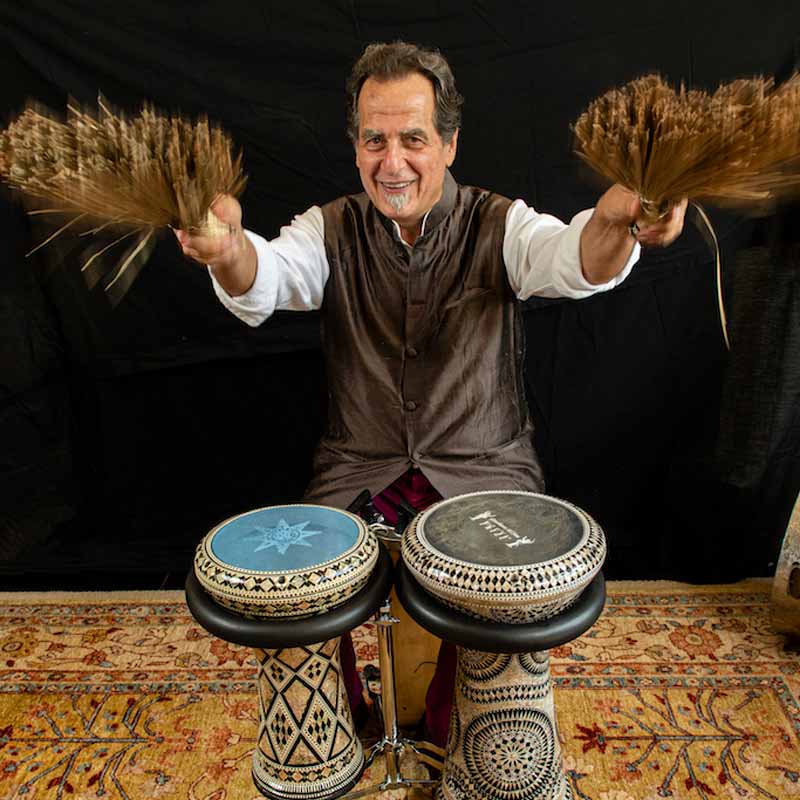 Born in Cleveland Ohio, percussionist/drummer JAMEY HADDAD holds a unique position in the world of Jazz and Contemporary Music. Haddad’s musical voice transcends styles and trends, and the universal quality of his playing has attracted many international collaborations. Regarded as one of the foremost world-music and jazz percussionists, Jamey has been the percussionist for Paul Simon for more than 20 years. Mr. Haddad also collaborates with Sting, with Michael League (Snarky Puppy) Bokante, Osvaldo Golijov, Yo Yo Ma, Dawn Upshaw, Esperanza Spalding, Joe Lovano, Billy Drewes, Dave Liebman, Elliot Goldenthal, Brazil’s Assad Brothers, Simon Shaheen, and The Paul Winter Consort. His own group “Under One Sun” had a 2017 release and was featured in Downbeat Magazine.
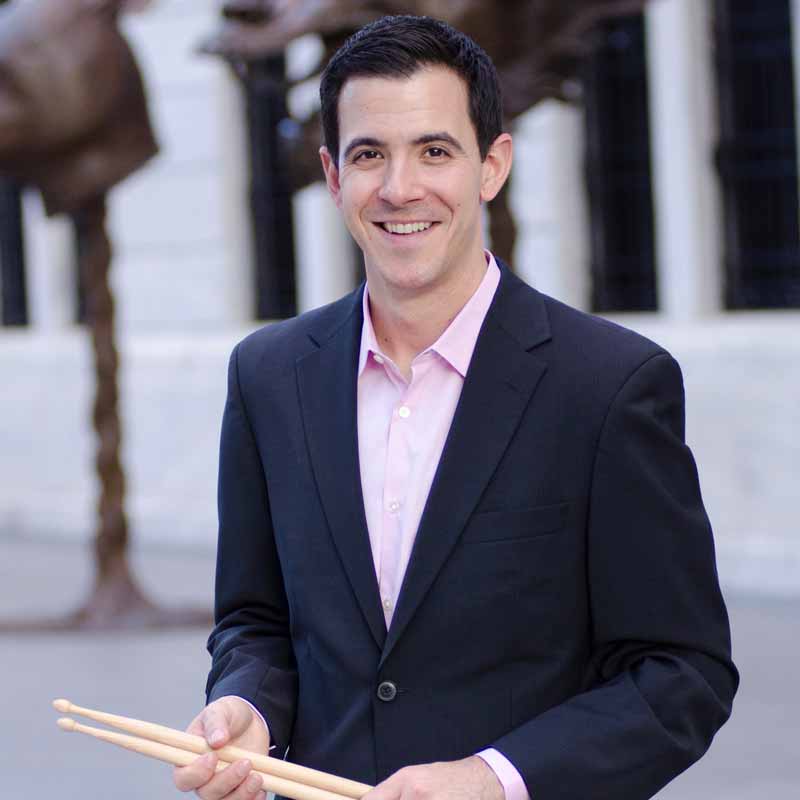 MARC DAMOULAKIS Principal Percussionist, Margaret Allen Ireland Chair, has been a member of The Cleveland Orchestra since August 2006. Marc is currently co-chair of the percussion department at the Cleveland Institute of Music. In his pursuit of developing the dynamic whole musician, he performs as a soloist, chamber musician and is a committed educator and clinician at institutions and festivals worldwide.
 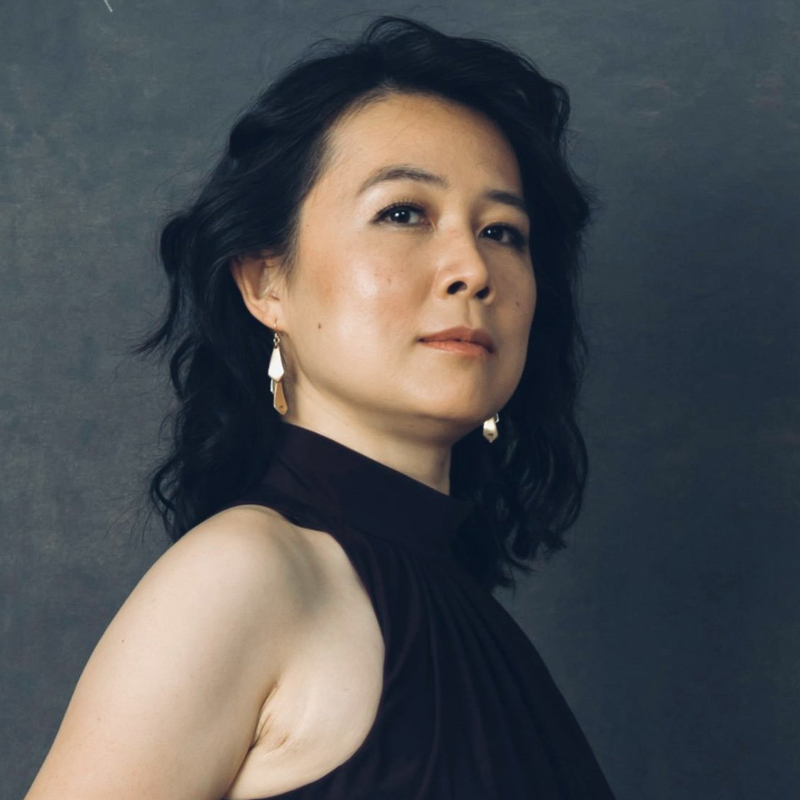 Praised by the Washington Post as a “jaw-dropping pianist who steals the show…with effortless finesse,” pianist AMY YANG balances a career as soloist, chamber musician, and pedagogue. Among her numerous collaborators are Yefim Bronfman, Roberto Díaz, Miriam Fried, Richard Goode, Kim Kashkashian, Arnold Steinhardt, Ida Kavafian, Patricia Kopatchinskaya, Anne-Marie McDermott, and Joseph Silverstein; the St. Paul and Mahler chamber orchestras; Third Coast Percussion; A Far Cry; members of the Guarneri String Quartet; and the Dover, Jasper, Momenta, and Aizuri string quartets. She has appeared as a soloist with the Houston, Tuscaloosa, and Mansfield symphony orchestras; the Connecticut Virtuosi Chamber Orchestra, and Orquesta Juvenil Universitaria Eduardo Mata de la UNAM. She made her debut playing Schumann’s Piano Concerto with the Curtis Symphony Orchestra under Osmo Vänskä at Verizon Hall at the Kimmel Center in 2023. At the Curtis Institute of Music, she is the Director of Chamber Music and Piano Studies.
 One of the most sought-after soloists and chamber music collaborators of his generation, ORION WEISS is widely regarded as a “brilliant pianist” (The New York Times) with “powerful technique and exceptional insight” (The Washington Post). He has dazzled audiences with his lush sound and performed with dozens of orchestras in North America including the Chicago Symphony, Baltimore Symphony, Boston Symphony, Los Angeles Philharmonic, and New York Philharmonic and at major venues and festivals worldwide.
 JUHO POHJONEN is regarded as one of today’s most exciting and unique instrumentalists. The Finnish pianist performs widely in Europe, Asia, and North America, collaborating with symphony orchestras and playing in recital and chamber settings. An ardent exponent of Scandinavian music, Pohjonen’s growing discography offers a showcase of music by Finnish compatriots such as Esa-Pekka Salonen, Kaija Saariaho and Jean Sibelius.
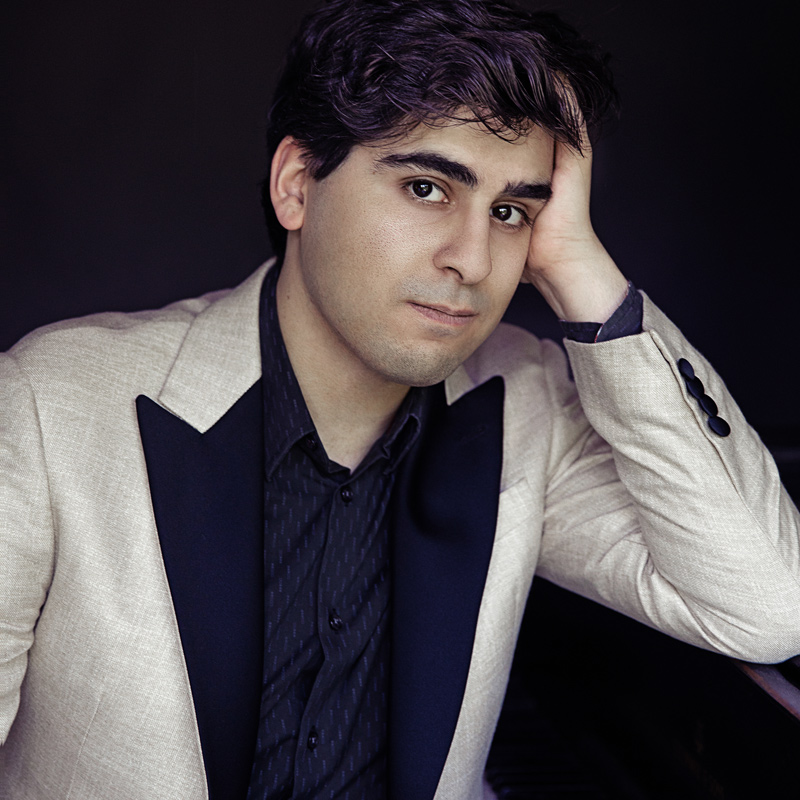 American pianist EVREN OZEL has been described as “an absolute wow” (Third Coast Review) and “an artist capable of lifting everyone to another level” (LaScena Musicale), praised for his blend of technical mastery and compelling artistry. He is the Bronze Medalist of the 17th Van Cliburn International Piano Competition (2025), where he also received the special prize for the Best Performance of a Mozart Concerto.
  DEREK ZADINSKY has performed in the Cleveland Orchestra as the Assistant Principal Bass since 2021, and as a section member previously, starting in 2012. Derek currently teaches at the Cleveland Institute of Music, Oberlin Conservatory, and Cleveland State University. Derek has a Bachelor of Music degree from the Curtis Institute of Music, where he studied with Harold Robinson and Edgar Meyer. As a chamber musician, he has performed with Carter Brey, Ray Chen, Jinjoo Cho, Vadim Gluzman, Ida Kavafian, Joseph Silverstein, and members of the Dover Quartet. As a soloist, he has performed twice with orchestras in Carnegie Hall, and has also recorded an album on the Oberlin Music Label, available for streaming on Apple Music, Spotify, and Amazon Music. Additionally, he has an edition of Bach’s Cello Suite No. 5 published on Apple Books.